Apalala | : dolcevita
Tags :
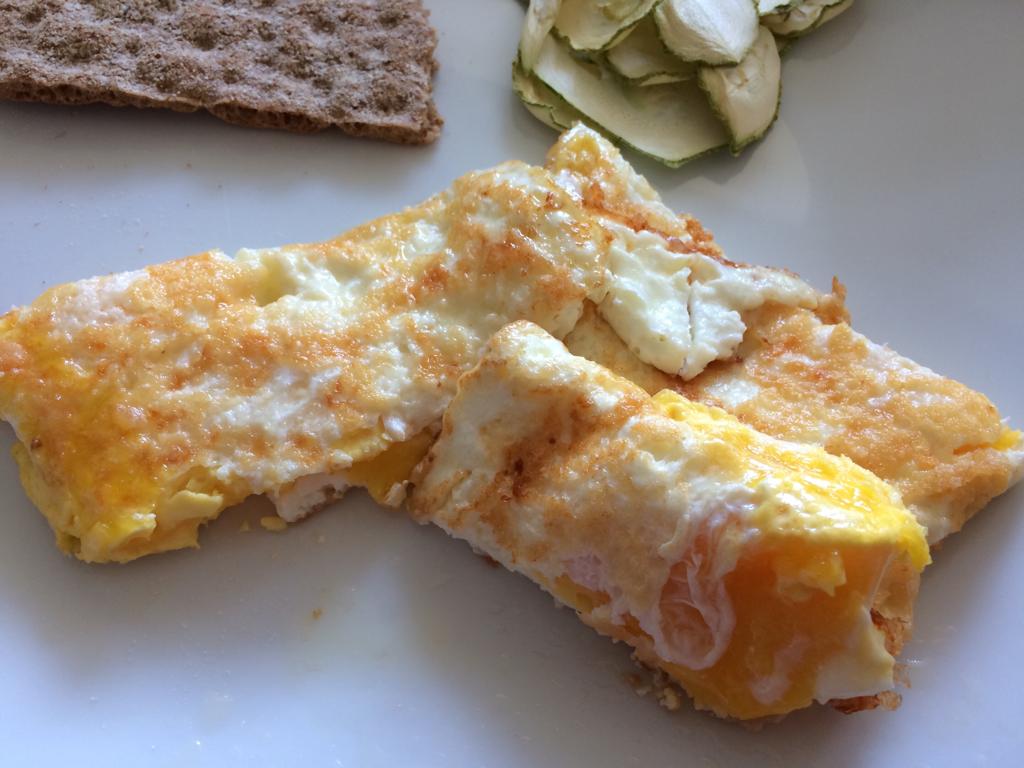
A la chica le encantan los huevos fritos, pero no las amarillas blandas. Diseñé esta receta para ella. El sabor está entre huevos fritos, hervidos/pochados, y tortilla. Hay que leer al final para una versión más elaborada.
Ingredientes para una persona
- Dos huevos grandes
- Media cucharadita de mantequilla
- Sal y pimienta
Preparación
Calentar la sartén a fuego medio con la mantequilla. Cascar los huevos, y separar las amarillas enteras de las claras. Agregar las claras a la sartén caliente. Agregar las amarillas en el centro cuando las claras comiencen a blanquear. Salpimentar. Doblar en dos cuando las amarillas comiencen a cuajar. Voltear una vez. Cortar en dos o tres y servir.
Variación
Usar aceite de tocineta y colocar una capa de queso parmiggiano rallado antes de colocar las claras. Agregar las amarillas junto con unos trocitos de queso de cabra maduro (estilo brie).
Autres articles
Tue 26 January 2016Apalala
El trajín del trabajo me ha tenido desayunando con frecuencia en la taguara de empanadas de la intersección de la Intercomunal con Cumbres de Curumo. Son desayunos deliciosos, balanceados, y sanos, por la manera de prepararlos.
Esta receta es una "reconstrucción" de su deliciosa empanada de caraotas dominó, la cual …
more …
Tue 26 January 2016Apalala
Con el tiempo se le va tomando cariño a las recetas que, sin complejidad ni complicaciones, evocan las emociones de momentos que fueron gratos en la vida. Esta es una que diseñé para Corina.
Ingredientes para dos personas
- Dos cucharadas de arroz salvaje
- Media taza de arroz arbóreo
- Cuatro cucharadas …
more …
Thu 05 December 2013Apalala
por Ilan Chester
Recuerdas los momentos que nos dimos
parecíamos dos niños
inocentes al amor
Ahora, con la edad y con demora
encontramos en el tiempo
un vacío muy difícil de llenar
Será la edad?
Serán los tiempos tan difíciles de hoy día?
Será la sed de independencia tuya y …
more …
Sat 17 August 2013Apalala
Jorge, quien no para de hablar con sus fantasmas.
Alberto, financista, abogado, programador, y quién sabe cuántas cosas
más, escribió un programa en PL/I para IBM, no para diseñar máquinas de
escribir, sino Jets de combate.
Virginia (por ponerle un nombre) llevaba un fajo de papeles
desvencijados en la …
more …
Sat 13 July 2013Apalala
En la onda de almorzar sólo, en una de las largas estadías en Chicago
conseguí un sitio pequeño en la la esquina de la calle donde me alojaba.
No recuerdo el nombre, pero era bueno, y se llenaba, por lo cual casi
siempre iba a deshoras.
En ese sitio probé …
more …
Fri 05 July 2013Apalala
Homesick, lo llaman los gringos. Es "extrañar tu hogar". Es algo que
los niños conocen bien. Lo sienten cuando se los envía al colegio por
primera vez, aunque eso sea por pocas horas, y lo siguen viviendo
durante años. A todos nos da. A unos más que otros. A mí …
more …
Fri 24 May 2013Apalala
I've written elsewhere about how after having procured a laptop that
could finally run Eclipse+PyDev well, I decided to switch to VIM as my
main editor for Python programming.
This time I won't talk about why I was so tempted to switch to a
keyboard-friendly environment, but about one …
more …
Tue 21 May 2013Apalala
Don't tease, I won't stray, to
Follow this walk, The Way
How dare I else do?
Eliza thus told me to!
I grieve the adrift of those
Bussy such, grok not the sigh
Lo, behold, in all his might! The
King wears no clothes
more …
Sun 19 May 2013Apalala
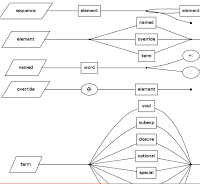
Grako 2.0.0 was just released. This new version includes many
simplifications to the generated grammars, semantics through delegation,
a complete antlr2grako example, and the ability to create silly
diagrams of the grammars through graphviz. For a full list of changes,
see:
PyPy or
the Bitbucket
changelog.
more …
Wed 15 May 2013Apalala
When in doubt, seek Honey
Honey's always home
If you meet The Wicked Witch of West
Just click your heels times three
Don't mind the shoes you're wearing
'Cause home ain't where you are
It's where you want to be
When The Red Queen of Hearts is near
Paint a …
more …
Sun 12 May 2013Apalala
¿Cómo podía algo tan maravilloso, la puerta a todas las vidas
posibles, parecerles tan tedioso?
Es lo que me atormentaba cuando mis hijos comenzaron a aprender a
leer. Para ellos era otra tarea sin significado, peor que tener que
recoger los juguetes al terminar de jugar.
Pero llegó un día …
more …
Thu 02 May 2013Apalala
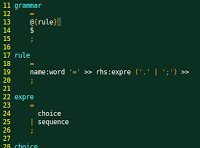
Grako 1.4.0 has been published with this changelog:
- BUG! Sometimes the AST for a closure ({}) was not a list.
- Semantic actions can now be implemented by a delegate.
- Reset synthetic method count and use decorators to increase
readability of generated parsers.
- The Grako EBNF grammar and the bootstrap …
more …
Thu 11 April 2013Apalala
I just released a new version of Grako:
https://pypi.python.org/pypi/grako/1.3.0
The most relevant change is the the memoization cache optimization
thanks to the advice given by Kota Mizushima.
This time I'm requesting help on the work on
the semantic_delegate branch of the repository …
more …
Sun 31 March 2013Apalala
Mira,
Hace tiempo que quiero hablar contigo, pero en serio, no así, de vez
en cuando, y sobre pendejadas, como si no pasara nada.
Esta vaina tiene que acabar. Me refiero a esta conexión maldita que
transgrede el tiempo y el espacio, y que hace que yo me sienta mal …
more …
Sat 30 March 2013Apalala
Hay quienes no fueron
bautizados con agua
sino con saber
Saber sobre tantos
ungidos en en sangre
derramada por quien piensa
que quien piensa por su cuenta
no merece perdón
sino en vez persecución
incomunicación
desaparición
Que quien odia es capaz
de entablar
a quien habla de justicia y paz …
more …
Sat 16 March 2013Apalala
Grako 1.2.0 has been released with the following changelog:
Grako (for grammar compiler) is a tool that takes grammars in a
variation of EBNF as input, and
outputs memoizing
PEG
parsers in Python.
1.2.0
- Lazy rendering of template fields.
- Optimization of rendering engine's indent() and trim …
more …
Tue 12 February 2013Apalala
Grako 1.0.0 has been
released to PyPi. It's
feature complete, and very fast.
I'm currently using it to parse and translate millions of lines of
COBOL.
Enjoy!
more …
Sun 13 January 2013Apalala
Grako is feature complete,
and I'm already using it for the project that required it. The parser
generated by Grako for
my COBOL grammar is already
parsing a couple of hundred thousand lines of code, with failures so far
attributable to the grammar, and not the tool
I won't bless …
more …
Wed 09 January 2013Apalala
After my difficulties translating SoftAG Natural using ANTLR v3, and a
new request to do the likes with COBOL, which is a programming language
as large and as ambiguous, I decided to explore other options.
I found that most of the solutions out there are lack a maintainer,
lack users …
more …
Fri 07 December 2012Apalala
Me resulta perturbantemente paradójico que una mente genial y una
personalidad sin par como las de Simón Díaz pase sus última época en la
disminución mental de la senilidad.
Quiero buscarle significado a esto, pero no lo consigo.
¿No debería a alguien así fallarle primero el corazón, o el paso …
more …
Tue 06 November 2012Apalala
This compelling essay was written by my dear, departed friend Rev. Jeff Russell in an e-mail to my dear friend Q.

Politics isn't inherently evil. It's inherently evil only with the
connotations we tend to associate with politics. That is, manipulative,
selfish, one-sided, etc. But being manipulative isn't necessarily evil …
more …
Sun 04 November 2012Apalala
Esta salsa es una clásica "amatriciana", pero orientalizada al
extremo.
Para cuatro personas:
- Una lata de tomates maduros de 800g (400g netos)
- Una cebolla grande
- 200g de tocineta
- 500g de pasta china de trigo al huevo.
- Puré de fruta dulce (lechosa, mango, ciruela)
- Un trozo de queso maduro (parmigiano, pecorino …
more …
Sun 21 August 2011Apalala
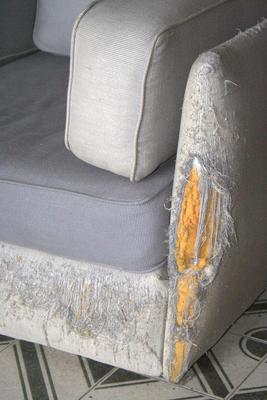
With time
Love shapes a soul
Like water carves a stone
more …
Mon 09 May 2011Apalala
I started solving the problems in Project
Euler to exercise my mind, augment my
knowledge in general algorithms and maths in general, and to gain
practice with specific programming languages, their standard libraries,
and the many specialised libraries available out there.
Most of the problems so far have been solved …
more …
Fri 04 February 2011Apalala
¿Se acabaron las direcciones IP?
Las direcciones
IP son la suerte de
números telefónicos que los dispositivos conectados a la Internet usan
para ubicarse y comunicarse unos con otros. Hoy corre bajo el titular
IPcalipsis la voz de que IANA,
el organismo encargado de administrar las mas de cuatro mil …
more …
Tue 07 December 2010Apalala
Es verdad. La probabilidad de que nuestro disco duro muera
repentinamente es mucho mayor que la de que Gmail pierda nuestro correo
electrónico. Pero tener un respaldo no sólo contribuye a nuestra
tranquilidad, sino que también nos permite acceder a los mensajes cuando
no disponemos de acceso a la Internet …
more …
Sun 28 November 2010Apalala
Los discos duros de un
terabyte (1000
gigabytes) están aquí. Su
mayor capacidad, mayor velocidad, y su relación precio/densidad de
información hacen tentador el usarlos para resolver el perenne problema
de falta de espacio en este universo digital cada vez más multimedios.
Pero... los discos duros son los componentes …
more …
Mon 15 November 2010Apalala
Mon 15 November 2010Apalala
Sun 14 November 2010Apalala

Según mi hijo, la población estudiantil de su
colegio se divide en:
- 40% monstruos
- 30% sifrin@s
- 25% normales
- 5% desadaptados
Los monstruos son de distintos tipos, pero en general sólo están
pendientes de echar vaina, sabotear, y destruir. En el grupo de sifrin@s
(mayoritariamente femenino) solo están pendientes …
more …
Sun 14 November 2010Apalala
La chaqueta que hay que lavar y planchar en la tintorería.
more …
Sat 13 November 2010Apalala

Estás trabajando en el bunker con la computadora puesta a tocar
las 6782 canciones en forma aleatoria, Eminem, Beatles, Dimensión
Latina, Chopin, ...
Vas a hacer pipí y a reponer la hidratación y dejas la música sonando
en el solitario bunker.
¿Qué música sonó durante tu ausencia?
more …
Fri 29 October 2010Apalala
In the union between the body and the mind, the body vowed to pay more
attention, and the mind vowed to sleep more.
more …
Tue 28 September 2010Apalala
El amor no es un credo,
ni un compromiso,
ni un acuerdo,
ni una acción.
El amor es una emoción,
un sentimiento,
y la palabra "desamor"
un oxímoron.
more …
Sun 26 September 2010Apalala
Watch your thoughts, for they become words.
Watch your words, for they become actions.
Watch your actions, for they become habits.
Watch your habits, for they become character.
Watch your character, for it becomes your destiny.
more …
Fri 27 August 2010Apalala
Thinking things over means that most of the original stuff changes all
the time.

more …
Wed 07 April 2010Apalala
Either that, or Ubuntu hasn't implemented
it well either on Karmic or Lucid. Many people complain all over the Web
about problems like the ones I've experienced:
- Skips, skips, skips. Launch an apllication, skip; open a new page on
the browser, skip; switch worskpaces, skip; do almost anything but
stay …
more …
Thu 14 January 2010Apalala
Hoy el BCV hizo una segunda oferta de bonos por US$50 millones. Los
bonos no pagan intereses, son vendidos con un 16,25% de sobreprecio,
(Bs.4,30*116,25% más comisiones da Bs.5,10/US$), y maduran a los
noventa días.
Hoy el cambio paralelo cerró en …
more …
Thu 14 January 2010Apalala
Todo empresario, o quien por la razón que sea debe tener empleados,
sabe lo que la "inamovilidad laboral" produce: un deterioro de la moral
y la motivación individual y colectiva en la medida que los
emprendedores y responsables hacen el trabajo de los holgazanes e
irresponsables. Es un efecto nocivo …
more …
Wed 14 October 2009Apalala
I decided to install the Ubuntu 9.10 (Karmic Koala) beta, and crashed
the machine due to my impatience. After a reinstall of 9.04, the upgrade
to 9.10 went well. It took only a few hours (a similar attempt with
Windows would have taken days).
Now the update …
more …
Sun 11 October 2009Apalala
This weekend I managed to take care of the
problems that
have kept me from transitioning my main workstation from XP to Ubuntu.
The details follow.
OS Version
I downgraded to the 32-bit version of Ubuntu 9.04 (Jaunty). I found no
advantages in running at 64bit, and plenty of …
more …
Thu 20 August 2009Apalala
Pienso que es buen momento para salir de este tema.
Aunque a algunos les cueste creerlo, me considero una persona
sumamente espiritual (no digo religiosa por las razones que expongo
luego).
Tan espiritual soy, que estudio las enseñanzas de todos los sabios y
profetas, tengo sumo respeto por sus dioses …
more …
Tue 28 July 2009Apalala
Since the early days of software development we learned that there
were some forces that were determinant for a project's success. We
identified the triangle of scope, time, and resources (effort), and used
to say to our users: "pick two".
Soon afterwards we understood that those three dimensions were not …
more …
Sun 19 July 2009Apalala
It's been a while since I last wrote about my
plan to migrate
from Windows XP to Ubuntu Linux. The plan needed refining, and I needed
the time to proceed with the migration. What follows is the transcript
from my chalkboard with the current plan.
Repartitioning
The backups and repartitioning …
more …
Sat 20 June 2009Apalala
Practiqué esgrima mientras estuve en la universidad, en la primera
mitad de los '80, cuando en las competencias tenían que estar varios
jueces para decretar justamente los toques. Comencé con florete, que ya
era eléctrico, pero en el cual el juez todavía tenía que recitar los
movimientos y la técnica …
more …
Mon 15 June 2009Apalala
Cora escribe sobre arte en los niños.
more …
Sun 24 May 2009Apalala
This recipe was originally written for the first edition of the recipe
book by parents, teachers, and students of the Eduplin Preschool.
These days Italians frequently use the word "pasticcio" to describe
complicated stuff, much like Venezuelans would use "pastel" (pie). It is
because, in all its forms, the pasticcio …
more …
Sat 16 May 2009Apalala
Me bautizaron en la iglesita del Barrio El Aeropuerto, allí, cerca del
Aeropuerto de Maiquetía y de Catia La Mar. Cuando quise casarme, la
Iglesia pidió una fe de mi bautismo, pero la iglesita ya no tenía
párroco, y estaba derruida y abandonada. Dije "¡Pues que me vuelvan a
bautizar …
more …
Sat 02 May 2009Apalala
There are historical and circumnstantial reasons for my continuing to
run Windows. My first personal computer run HP Basic, the second CP/M,
the third MS/DOS, and after a short and unsuccessful stint with a Mac,
my professional work started with MS Windows 2.0, and stayed on Windows …
more …
Fri 01 May 2009Apalala
A través de los siglos, la sopa de cebollas ha sido considerada
"comida de pobres" por la facilidad de su preparación y el bajo costo y
disponibilidad de las cebollas y demás ingredientes. Hay recuentos
pseudo-históricos que dicen que en las calles de Europa siempre había
calderos llenos de …
more …
Thu 26 February 2009Apalala
Vuelven los rumores sobre una inminente devaluación del bolívar,
impulsados de nuevo por los economistas mediáticos (los mismos cuyas
bolas de cristal fueron incapaces de predecir el colapso del sistema
financiero del primer mundo, y la actual recesión global).
En
otro artículo
expliqué
que, al estar anclado al dólar, el …
more …
Fri 20 February 2009Apalala
Mi reputación como economista está en juego, porque dije desde el
inicio de la crisis financiera global que el índice Dow Jones no podía
bajar de los 7500 puntos, y esta semana está a punto de hacerlo.
La razón para mi afirmación es que por debajo de ese nivel las …
more …
Thu 05 February 2009Apalala
Las encuestas, que solo pueden ser publicadas hasta el 7 de febrero,
coinciden y hablan claro: las opciones del Si y el No están
estadísticamente empatadas, y la victoria va a estar determinada por la
(ausencia de) abstención en cada lado.
Como en diciembre de 2006, la opinión es mayoritariamente …
more …
Thu 22 January 2009Apalala
Eso.
"El Mercado" de las teorías económicas clásicas (con todas las
inconsistencias y faltas que las mismas tienen) jamás se ha referido a
la especie de casinos que son las instituciones de intercambio de
papeles (ojo que no dije valores).
El mercado de las teorías clásicas es el todo de …
more …
Thu 15 January 2009Apalala
Hay frecuentes discusiones sobre cómo elevar la calidad de Wikipedia
en español a la que tiene la versión en inglés.
En este momento hay 2683000+ artículos en Wikipedia en inglés, y sólo
431000+ artículos en la versión en español.
Cubrir la diferencia ya sería un trabajo monumental, pero la situación …
more …
Sun 04 January 2009Apalala
Hoy estuve pensando sobre esta cosa de disculparse, y me pareció que
no es nada sencillo. Se me ocurre que como que hay varios grados o
clases o tipos de disculpas.
En el nivel básico está ese de que, como las intenciones o los motivos
eran buenos, no hay razón …
more …
Sun 02 November 2008Apalala
Hola Emeterio,
Hace tiempo que no te escribía porque hace tiempo que no te leía. He
leido tus escritos recientemente y parece que estás tratando aplicarle
el sentido común al reparo del desastre económico que los dogmáticos de
un bando lograron (tal vez para evitar que otros dogmáticos propicien un …
more …
Mon 27 October 2008Apalala
The wonderful book by Eric D. Beinhocker reccounts how classic
economic theories were formed and transformed during the past few
centuries, and why those theories fail when confronted with economic
reality. It then goes on to propose a new view of economics approaching
it from the perspective of
evolution theory …
more …
Thu 23 October 2008Apalala
Los "expertos" en economía están ya, como samuros, dando vueltas por
los espacios de prensa, radio y tele, augurando un negro desenlace de la
crisis financiera global para Venezuela (cabe preguntarse por qué estos
mismos "expertos" no usaron sus bolas de cristal para augurar el colapso
que se avecinaba y …
more …
Sat 12 July 2008Apalala
No existe.
Mi intención no es fomentar la paranoia, sino promover el
entendimiento sobre las consecuencias de participar en la Internet.
Tengo un amigo que cumple años por estos días, y con quién no he
tenido contacto en mucho tiempo. Decidí buscarlo en la red.
No solo encontré sus direcciones …
more …
Fri 23 May 2008Apalala
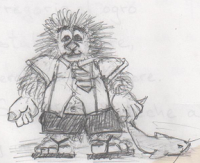
Cuando mi hija estaba comenzando a hablar corrido, estaba
medio peleada con las erres, así que le escribimos este poema para que
practicara.
GREGORIO EL OGRO
por Corina Vicentini et al
Gregorio el ogro estaba alegre,
pero tenía hambre.
Soñaba con leche agria
y un suculento bagre.
La tripa le …
more …
Wed 12 March 2008Apalala
La Reserva Federal (La "Fed", el Banco Central) de EEUU anunció que,
en acuerdo con otros bancos centrales, inyectará $200 mil millones a la
economía para aliviar la falta de liquidez en el sector financiero.
La
mayoría de las reseñas de prensa
al respecto indican que, como consecuencia, la bolsa …
more …
Sat 08 March 2008Apalala
Hoy vi unas fotos de una fiesta juvenil en las cuales los chamos
hacían éste signo con la mano:

Como las mentes inquisitivas desean saber, me fui en la
red a buscar su significado.

Resulta que el uso del dedo ínidice y del meñique se llama Corna
refiriéndose a los …
more …
Sat 16 February 2008Apalala
Ante comentarios de algunos economistas mediáticos muchos han llegado
a creer que una devaluación del bolívar respecto al dólar es inminente,
cuando la realidad objetiva es que no existen condiciones para una
devaluación si no que más bien hay argumentos fundamentados para
proceder a una revaluación del bolívar respecto al …
more …
Fri 05 October 2007Apalala
En la imprescindible novela 1984 de George Orwell, el "Gran Hermano",
un ícono videográfico, controla el pensar y hacer de las masas con dos
estrategias:
- El control del lenguaje a travéz de la obligatoriedad del uso de la
"neolengua"
- El control de la historia antigua, pasada, y reciente a travéz …
more …
Thu 27 September 2007Apalala
Como estoy de papá solo, me ha tocado preparar comida por lo menos dos
veces al día todos los días. Para ello he buscado preparaciones que, sin
dejar de ser ricas y sanas, sean sencillas y rápidas (el tiempo vuela
cuando hay que llegar al colegio antes de las 7 …
more …
Tue 25 September 2007Apalala
Pienso que el Banco Central de Venezuela (BCV) debería intervenir en
el mercado de bonos que genera el valor del dolar "permuta". La razón es
que los altos precios del dólar paralelo producen un efecto psicológico
que va en contrade las políticas anti-inflacionarias del mismo BCV y del
gobierno.
El …
more …
Sat 22 September 2007Apalala
En una nota anterior
expliqué las razones por las cuales es conveniente considerar una
reconversión monetaria como la introducción de una nueva moneda, y
adaptar los sistemas informáticos para el manejo de múltiples monedas.
¿Cómo se hace eso?
En un sistema que maneja múltiples monedas, un monto aislado carece de …
more …
Sat 22 September 2007Apalala
- Actualizado para el cambio de huso horario en 2007/12/09 03:00.
En otro
post
expliqué como y por qué lidiar con el cambio de huso horario en
Venezuela. Aquí explico cómo hacerlo sobre Ubuntu Linux.
Para lograrlo en una distribución Ubuntu 7.04 hice lo siguiente:
Respaldar el …
more …
Tue 18 September 2007Apalala
El anunciado cambio de huso horario en Venezuela tiene una aplicación
sencilla en la mayoría de los casos: atrasar el …
more …
Sat 01 September 2007Apalala
Al revisar la literatura producida en torno a la adopción del Euro en
la Unión Europea llama la atención la relativa poca importancia que se
le da a los retos informáticos en comparación a otros temas como el
efecto neto sobre el negocio por los posibles cambios de percepción en …
more …
Thu 02 August 2007Apalala
El Banco Central de Venezuela (BCV) reportó ayer que la inflación del
último mes fue de 0.5%, un aumento cónsono con la meta de inflación para
el año.
Sin esperar un instante, ya los profetas chimbos (ellos se dicen
economistas) sacaron sus bolas de cristal también chimbas para predecir …
more …
Tue 31 July 2007Apalala
Hace unas semanas compré un computador de escritorio con todos los
hierros que el presupuesto predeterminado podía lograr: Pentium D a 3.0
GHz, 1 Gb de RAM, 160 Gb en disco, etc., más un monitor de 19" a
1990x1400.
Una de las razones por las cuales compre desktop es …
more …
Tue 31 July 2007Apalala
Es difícil de por sí, y más difícil aún por las actitudes que a veces
despierta en otros. Por eso a veces hace falta explicarlo así:
No estoy buscando ser mejor que tú. Lo que pasa es que estoy
poniendo todo mi esfuerzo en ser mejor que ese quien fui …
more …
Thu 26 July 2007Apalala
El excelente chef venezolano Sumito Estevez bloguea sobre los horrores
de los derechos de autor y patentes sobre lo que el llama "intangibles
populares".
Aquí
y
aquí.
more …
Sat 16 June 2007Apalala
A friend pointed me to a
Kodak announcement
about new filter-array patterns for digital camera sensors. In short,
what they do is to add
panchromatic
pixels to
the filter array patterns.
I don't see a breakthrough because adding specialized pixels (for
luminosity in this case) is an obvious evolution when …
more …
Wed 13 June 2007Apalala
Para los hermanos Mazzei y Jetty mamá
Hace unos meses hablaba con un amigo quien estaba sufriendo de una de
esas enfermedades crónicas que cuando no es una cosa un día, es la otra.
Yo le dije que, a pesar de que estaba entero, seguramente las épocas de
alto "estrés …
more …
Wed 06 June 2007Apalala
Van algunos comentarios en torno al artículo que mi amigo
Pedroescribió sobre "peer
reviews".
[versión 0.1]
En el mundo del software una revisión por pares no es solo una
oportunidad para mejorar la calidad del producto (el "código fuente") a
través de la detección temprana de defectos, como …
more …
Tue 15 May 2007Apalala
2010-03-12 Amendment: After doing the research right, my conclusion
is that the tools*are*available for Python, that Python is an
excellent software development platform, and one that allows more
productivity than, say, Java.
This article is about programming languages in the context of
professional software work. While considering several …
more …
Fri 29 December 2006Apalala
Esta madrugada falleció el abogado venezolano Carlos Bastidas.
Muchos entre quienes me conocen no entenderán por que vuelvo a mi
normalmente abandonado blog para hablar sobre esto. No importa: yo si
entiendo.
Carlos Bastidas fue, sin que me quepa duda, uno de los mejores abogados
penalistas en Venezuela, conocedor de …
more …
Mon 06 November 2006Apalala
I don't mind where you come from
No me importa de donde vengas
As long as you come to me
Mientras vengas a mi
I don't like illusions I can't see
No me gustan las ilusiones que si no puedo
Them clearly
Verlas claramente
I don't care no I wouldn't …
more …
Fri 03 November 2006Apalala
En diciembre de 2002 la gerencia alta y media de PDVSA decidió sumar a
la empresa al paro indefinido que estaba en marcha. Las razones no
fueron técnicas ni laborales, sino políticas: era una manera de forzar
la renuncia del presidente de la república. Alrededor de la mitad de la …
more …
Sun 15 October 2006Apalala
Hace unos días tuve la oportunidad de escuchar a José Toro Hardy en el
programa de radio de Unai Amenabar, y verlo más tarde como invitado en
el programa "Aló Ciudadano".
José Toro Hardy es economista, experto petrolero, conocedor de la
historia venezolana, y uno de esos grandes didactas quienes …
more …
Sun 24 September 2006Apalala
O la falta de pudor...
Será que ando en una nota necrofílica?
more …
Sat 23 September 2006Apalala
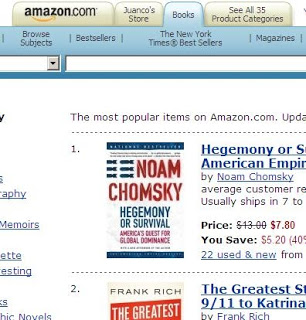
Un don es una responsabilidad
Hace unos veinte años, cuando estudiaba ingeniería de la computación
en la universidad, aprendí que
Noam Chomsky
fue uno de los
precursores de los lenguajes de programación, y con ellos de la
informática en general, a través de su formalización de las gramáticas
de los …
more …
Mon 11 September 2006Apalala
Tue 05 September 2006Apalala
It takes more than you'd think to bootstrap a team
One might think that it is enough to create a directory under
/var/lib/cvs to get a new CVS repository working for a project. My
experience is that it takes much more to set up a CVS repository that …
more …
Sun 20 August 2006Apalala
About why to design before implementing
Yesterday I gave a shot at trying to scan some of the 35mm negatives
of my old
Black&White
photos using a 1200 DPI flat-bed scanner. It failed misserably:
- The scan showed severe Moiré
and other kinds of noise in the pictures.
- The sizes …
more …
Sun 20 August 2006Apalala
La necesidad es la madre de todas las ideas
Muerto de hambre cerca de la media noche, y estimulado por los restos
de la salsa de las albóndigas del mediodía, decidí prepararme los
tequeños que no se
hicieron más temprano por falta de serotonina.
Apresurado y flojo como soy, decidí …
more …
Fri 23 June 2006Apalala
The less, the better
According to
Wikipedia:
A raw image file contains minimally processed data from the
image sensor of a digital camera or image scanner. Raw files are so
named because they are not yet processed and ready to use by a
bitmap graphics editor, printed, or displayed by …
more …
Thu 22 June 2006Apalala
The lost beauty
My first serious attempts at good fotography where with black and white. I cannot tell now if it was the artistic nature of B&W of photography or it's easiness over budget which dominated, but I'm sure both were
involved.
Today, I'm getting my self ready to …
more …
Fri 16 June 2006Apalala
This is a delicious way to prepare fresh salmon. The recipe has
nuances that stimulate almost every taste receptor in your body.
Ingredients for four people
- Four fillets of skinless, boneless, and very fresh (non-smoked)
salmon cut into byte-sized chunks
- A red onion, sliced or chopped
- About four spoonfulls of …
more …
Fri 09 June 2006Apalala
Esta receta fue originalmente escrita para la primera edición del
libro de recetas por padres, representantes, maestros, y alumnos, del
`Colegio Eduplin.
Hoy en día los italianos usan con frecuencia la palabra "pasticcio"
para describir situaciones que se enredaron, tal como nosotros los
venezolanos usaríamos "pastel." Y es que, en …
more …
Wed 06 August 2003Apalala
Black beans are a typical dish in all countries in and around the
Caribbean: the islands, México, Central America, and the North of South
America. They're a favorite because they're delicious, they can be
prepared to accompany many foods or as main dish, they taste great when
prepared in advance …
more …
Mon 19 June 2000Apalala
Like the reptile it's named after, Python squishes problems little by
little.
Today I spent the whole afternoon with a snake. I've known Python for
several years now -- the oldest version of Python on my hard drive is v.
1.3, dated March 1996 -- and I've studied and played with …
more …
Sun 28 November 1999Apalala
A standard testing framework for Delphi has been long overdue. Now
there is one and it's even open source.
In my article on
Xtreme testing, I talked about how it could improve the quality of
programs as well as the speed and confidence with which they were
developed. For the …
more …
Sun 21 November 1999Apalala
So Microsoft is a monopolistic monster. What are you going to do,
gather the whole village to assault the castle with hoes and pitchforks?
Burn it down with torches? Get real.
James Whales' 1931 movie of Mary Shelley's
Frankenstein has become an
icon of horror cinematography. Fulfilling his personal vision …
more …
Sun 14 November 1999Apalala
Launching a full-blown IDE for a brief Java programming excursion can
be like driving the car to a nearby shopping mall. If you have ever
imagined the equivalent of a Java bicycle, your fantasy may have come
true with BeanShell v. 1.0.
I'd just moved to Davis, California, and …
more …
Sun 07 November 1999Apalala
Will open source software development be smothered by the patents
avalanche or help to end it?
As Developer News correspondent Constance Petersen discussed in her
article
last week, 5 Nov. was Burn All GIFs Day. The protest was organized by a
group of open-source developers and Webmasters opposed to the …
more …
Sun 31 October 1999Apalala
When royalties are out of the question, programmers find innovative
ways of earning profits, such as providing value-added services. New
ways of making business out of open source are being invented every
day.
"Amateurs!" That's what critics call open-source programmers. And
sometimes they really mean "hackers": those who lack the …
more …
Sun 24 October 1999Apalala
Open source programming underdogs may have more advantages than their
critics imagine. But whether they win or lose in the end, it's their
story that inspires.
Giving away software is a "strategy of the weak." At least most
business analysts consider it so when comparing the strategy against the
"embrace …
more …
Sun 17 October 1999Apalala
Extreme programmers brave the open source slopes.
You can't do it. You can't add the feature. It's too risky. You'd have
to change a core part of the program, and who knows what kind of subtle
bugs might creep in doing that! You got hold of the source code and …
more …
Sun 10 October 1999Apalala
Confused by the ruckus over open-source software? Bobby McFerrin had
it right: Don't worry, keep hacking.
Everybody's talking about the "open software revolution." From geek
forums like SlashDot to academic journals like Communications of the
ACM, from the New York Times to The Wall Street Journal, everyone
is saying that …
more …
Sun 03 October 1999Apalala
What does all this licensing stuff really mean?
I develop software for a living, so my position regarding third-party
software has always been pragmatic: consider the cost and evaluate how
well each solution meets your requirements. Most open source software is
licensed free of charge. But does software that is …
more …
Sun 26 September 1999Apalala
What "revolution"? A long-term open source enthusiast describes his
conversion.
Source code has been available for decades, long before the so-called
"open source revolution" started. I have found value in using and
writing open source software since I first began experimenting with open
source solutions to critical business problems. It's …
more …
Sat 14 August 1993Apalala
Won Ton Mein era un viejo carpintero, célebre en toda China por la
belleza de su trabajo. Won Ton elaboraba sus piezas según el más
tradicional estilo chino y completamente a mano. Un día su primo Lai
Taipei Luá lo visitó para encargarle un cofre que deseaba regalar a su …
more …
Wed 14 October 1992Apalala
A quinientos años del descubrimiento de América, el encuentro de dos
mundos, se ha arraigado un poco la tendencia a llamar a nuestro planeta
"La Aldea Global". Y es que, en la actualidad, la moderna tecnología de
telecomunicaciones nos pone en contacto con cualquier lugar del mundo en
cuestión de …
more …
Fri 31 July 1992Apalala
¿Qué es memoria?
Memoria significa capacidad de recordar, y lo que se recuerda es algún
tipo información. En el campo de la informática, al hablar de memoria
nos referimos tanto a la información como a la capacidad de recordarla.
La información más simple es el estado: color, peso, tamaño, etc …
more …
Tue 30 June 1992Apalala
La leyenda cuenta que en el año 490 A.C., el soldado Filípides,
cansado y maltrecho, después de haber corrido los kilómetros que separan
a Atenas de Maratón, donde se había librado batalla contra los persas,
falleció en los brazos de los atenienses, no sin antes entregar su
mensaje: ¡Victoria …
more …
Sun 31 May 1992Apalala
La concepción clásica de un programa de ordenador, es la de una
secuencia de instrucciones o pasos, que permiten indicar al aparato como
llevar a cabo determinada tarea o cálculo. Lo anterior no difiere mucho
de la definición general de la palabra "programa" en el diccionario.
Los primeros computadores eran …
more …
Thu 30 April 1992Apalala
COMPUTACION: f. Cómputo, cálculo (Sinón. V. Cuenta).
COMPUTADOR: m. V. ORDENADOR.
INFORMATICA: f. Ciencia del tratamiento automático y racional de la
información.
ORDENADOR, RA: M. Calculadora electrónica, constituida por un
conjunto de máquinas especializadas dependientes de un programa común,
que permite, sin intervención del hombre, efectuar complejas
operaciones …
more …